Header 1

Header 1
All images below are clickable

Sunday, 13 February 2022

Out in the Field - The Rooks.


Photographing black coloured birds at long distance on a very dull day is not a great idea.

Last Summer the large fields at the foothill of the site of Maiden Castle Dorchester were adorned with the colour yellow, (masses of sunflowers.)
Sunflowers are grown for the seeds and farm animal fodder.

Last week I visited the area and the it was black rather than yellow.
Large flocks of Rooks have now taken up the challenge of digging the ground and searching for food and hiding some.
They certainly have the correct beak for the job.


Rooks are 'wrongly' much maligned regarding their feeding preferences.
They are not the nest robbers like the other members of the Corvid family and eat, insects seeds and vegetables. However they will eat carrion. So they do a lot of good in reality.

Another habit they have is to 'Cache' food, hiding it in the ground and remembering where they buried it.


Remember for ID purposes, 
Rooks together, Crows on their own.
Unless they are Jackdaws of course, but they are much smaller.


Rooks are quite tolerant of other species, but they do enforce a pecking order.

Flying around the field and stopping to feed at vacant spots were several black-headed gulls in their Winter plumage.


Thursday, 10 February 2022

A Few Birds - Lodmoor Walk.

Birds regularly observed at Lodmoor Reserve Weymouth.

Kingfisher (Female)


Male and female Teal Duck are common and usually observed close to the footpaths.

Teal Duck

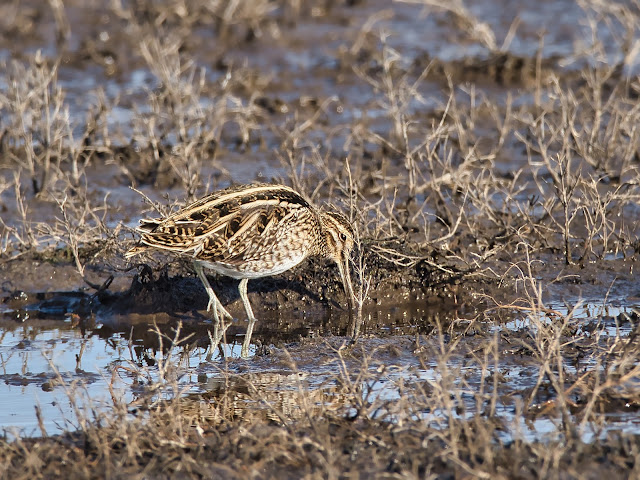
Snipe

Snipe are in attendance somewhere around the Reserve.
Some days they are not bothered by humans, other days they hide away in the reeds and are not easy to locate.


Generally there are at least three Little Egrets on the Reserve.

Little Egret

Lapwing can be observed throughout the year at the Reserve, but Winter is the time to see at least 100 either standing still in flocks or suddenly taking off, flying around and returning to the ground again.
Often it is the Marsh Harrier putting in a fly-bye that causes this.

Lapwing

Marsh Harrier


Een bericht voor Maria en Helma in Nederland.
Ik kan je blog momenteel niet bezoeken. Mijn antivirussoftware waarschuwt me dat niet te doen, omdat het op de een of andere manier gevaarlijk is.
Oprechte excuses.
Roy


Robin


Wednesday, 9 February 2022

Meds and Brents

Two species of interest observed at Ferry Bridge, Weymouth a few days ago.  

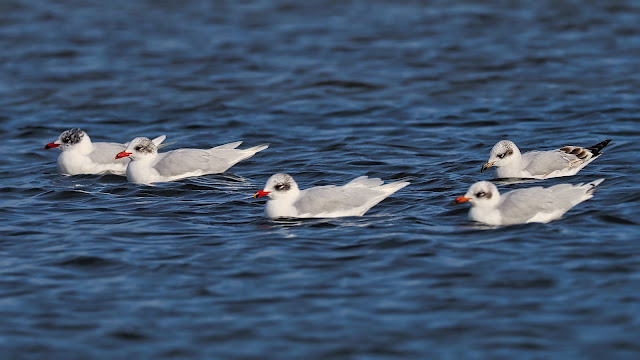
The Mediterranean Gull and the Brent Goose.


The Mediterranean Gull. 

A small flock resting on the water at Ferry Bridge dressed with their Winter plumage. 

This is a good area to find them during the Winter period 


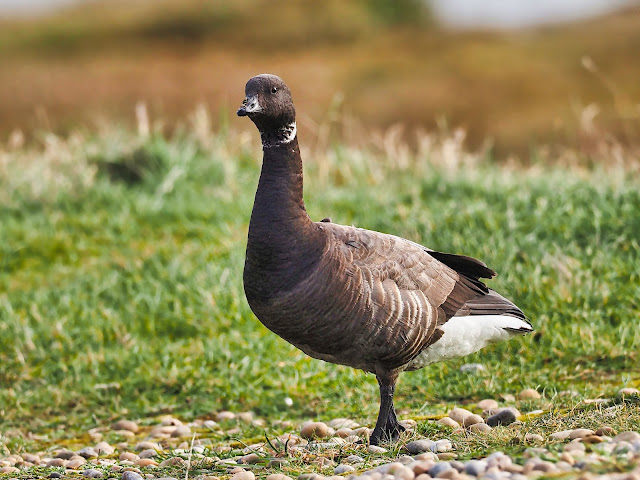
Brent Goose

Another species I also quite expected to find at Ferry Bridge.
Brent geese of the dark bellied variety.
There were about 30 in number on this occasion. 
It is not uncommon to find considerably more than this.