Header 1

Header 1
All images below are clickable

Sunday, 9 August 2015

Why Silver-Washed ?

Why is the Silver-washed Fritillary so named. 
Look at the underside of the wings of this female below.
You can see there are streaks of silver on the hind wings. 


A few action shots below of male and female Silver-washed in preliminary courtship flight.


They eventually ended up high up on Oak tree leaves


Saturday, 8 August 2015

Southern Hawker and Others

 The Southern Hawker Dragonfly

This is a female that I found this week in a sheltered spot basking in the sun.


Female Emerald Damselfly


Male Black-tailed Skimmer


Female Brown Hawker


Immature Female Common Darters (I think)


Larval Case (exuvia)


Friday, 7 August 2015

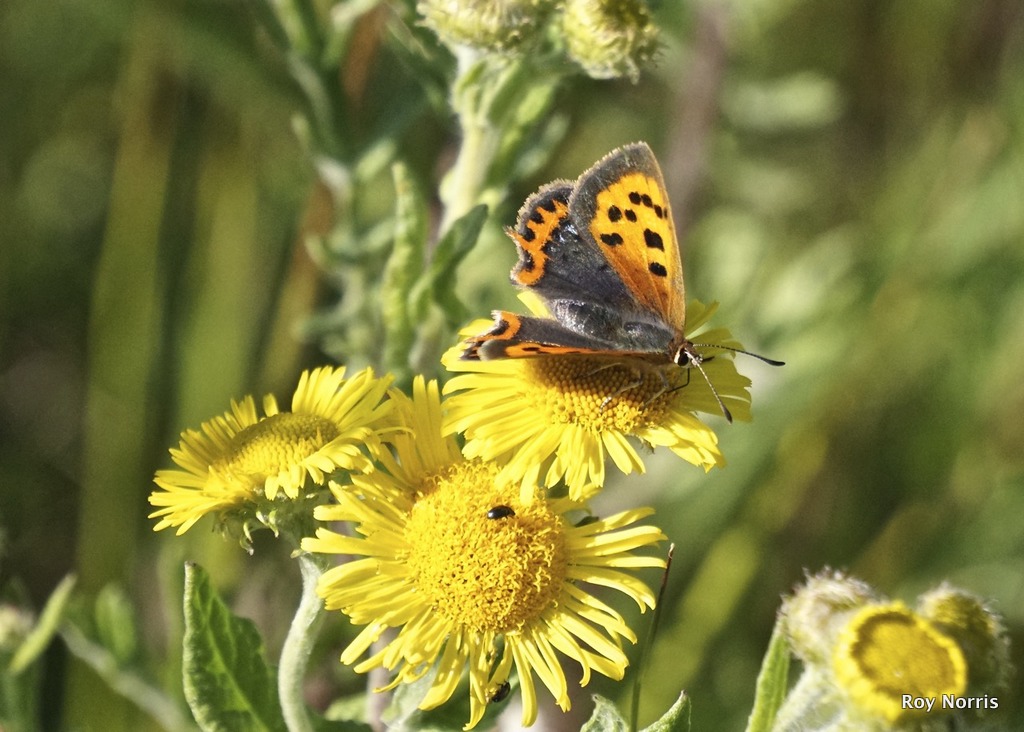
Small Copper Returns


The Small Copper (Lycaena phlaeas) a species that has avoided me for some time. I had to check my records to remind me the last time I actually observed one of these little beauties. 
It was one only in 2012 in England, before that quite a few during 2010 in Tuscany. 
So it was quite a surprise this week when conducting my Woodland/Heathland walk to find this female.


Thursday, 6 August 2015

A Rare Sight

The Common Blue Butterfly (Polyommatus icarus)

The Blue use to be the most common and widespread of our native species. 
In recent years it has declined considerably. In 2012 was its worst recorded year.

This year as part of the Big Butterfly count, Butterfly Conservation and the National Trust are asking the Public to search coastal sights for the species as it may be that due to less or non existent intensive farming on the coast that the Blue may have retained good numbers there.
I have observed a few more this year than last in the areas I search.

This is a male from the second brood of the year. 


Tuesday, 4 August 2015

More Chalkhill


A second visit to the Chalkhill Blue colony revealed that there is quite a healthy population this year.
This is very encouraging after only finding one last year.


Female

Male


Sunday, 2 August 2015

Junior Swallows

In the corner of a large meadow in the Parkland there is an Oak Tree. Its a favoured spot each year for immature Swallows to perch, while their parents fly low sorties over the grassland catching flies and returning to their offsprings.  Some of the immature practice their own low level stunts and then return to the tree. They have about another two months to build up their bodies and improve their flying skills before they endure the long flight back to Africa.


Check out the one on the right below, with eyes shut and beak open ready to receive another tasty morsel from its parent.